|
CU Prepares to Look at the Universe
in a Different Light
By Eileen Lambert
Colorado Daily Staff Writer
Thursday, February 12, 1998
The mysterious past of the universe will soon
be opened up and examined through a new CU-built ultraviolet-light-capturing
instrument.
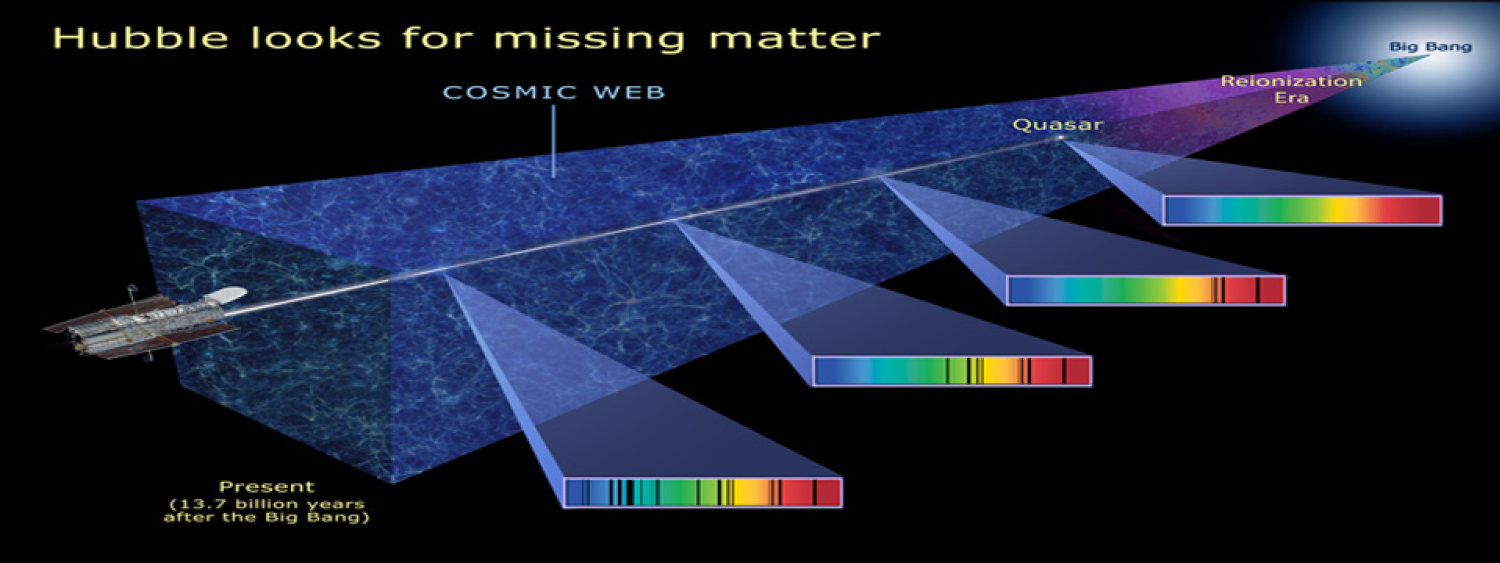
Quasars, which were once the brightest bodies
in the universe, have continued to die out over time. They are
the most powerful event at the middle of the galaxy and are so
far away that their light is billions of years old before it reaches
Earth, allowing scientists a look at the universe's distant past.
Eventually, quasars use up all the fuel around
them and starve. Although only a scattering of quasars still exists,
CU scientists will soon be able to use the $9-million Far Ultraviolet
Spectroscopic Explorer as a a "time machine" to look
billions of light years into the past at multitudes of quasars
and document the events that followed the Big Bang.
The instrument is part of a $100-million mission
scheduled for launch in October. On Wednesday, the instrument
was loaded and sent to Baltimore, Md., for integration into a
NASA ultraviolet-light gathering satellite.
FUSE contains four telescopes that will collect
and funnel UV light into the spectrograph. The information gathered
will tell scientists the temperature, density and chemical composition
of the quasars. The research will also bring an understanding
of the matter in space between the Earth and the quasars, because
scientists can observe how the matter absorbs the ultraviolet
light coming from the quasars.
"We may see things we've never seen before,
because we've never touched far ultraviolet wavelengths,"
said Michael Shull, a CU professor of astrophysics.
The Hubble Space Telescope looks at ultraviolet
light, but the wavelengths it studies are limited. FUSE will help
scientists discover all of the information available in shorter
wavelengths of ultraviolet light.
The instrument will have many uses for scientists.
Professor Jon Morse, of CU's Center for Astrophysics and Space
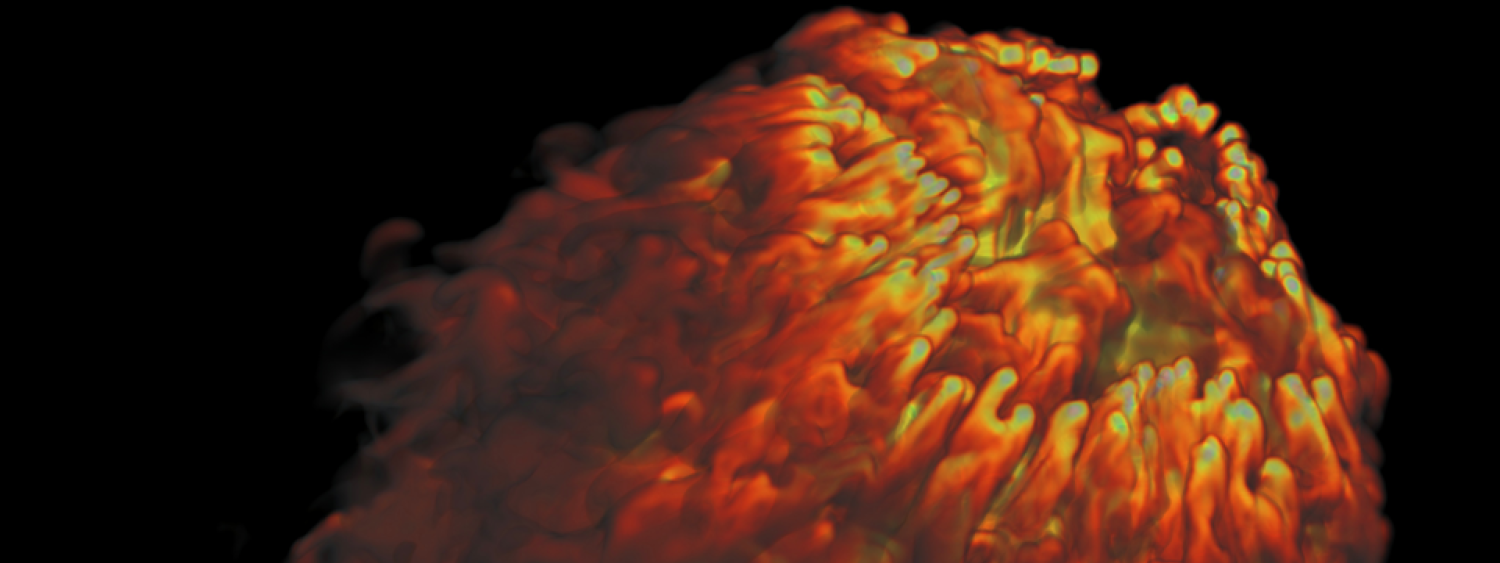
Astronomy, said his research will focus on the Orion Nebula and
other stars that eject high blasts of gas, producing shock waves
through the universe. This research will only examine objects
100 to a few-thousand light years away.
"There have been very few missions that
have looked at ultraviolet wavelengths, and FUSE, by far, is the
largest telescope looking at these ultraviolet wavelengths,"
Morse said. "This is going to open up an entire wavelength
domain for discovery."
Unlike other telescopes, FUSE must be in orbit
before it will work because the research is based on ultraviolet
light. Ozone and oxygen in the Earth's atmosphere destroy ultraviolet
light, protecting life but hindering Earthbased research.
CU will soon begin construction of another
instrument, the Cosmic Origins Spectrograph, which is a $25-million
project. The spectrograph is set for completion and installation
on the Hubble Space Telescope in 2002. This instrument will look
at longer ultraviolet light wavelengths than FUSE, but it reaches
farther in the universe than existing technology.
"FUSE and COS are really going to tell
us enormous things about how the galaxy was formed," Shull
said.
The construction of FUSE employed about 32
CU students, about a quarter of whom were undergraduates, said
John Andrews, the FUSE mission manager and CASA research associate.
The idea was formulated about 17 years ago, and the project became
reality five years ago. The international
FUSE mission involves scientists from the United States, France
and Canada. Warren Moos, chair of the John Hopkins Department
of Physics and Astronomy, is directing the FUSE mission.
|