CASA Home Page
 
  Search:
  

CU Says All Systems Go


By Dave Philipps
Colorado Daily Staff Writer

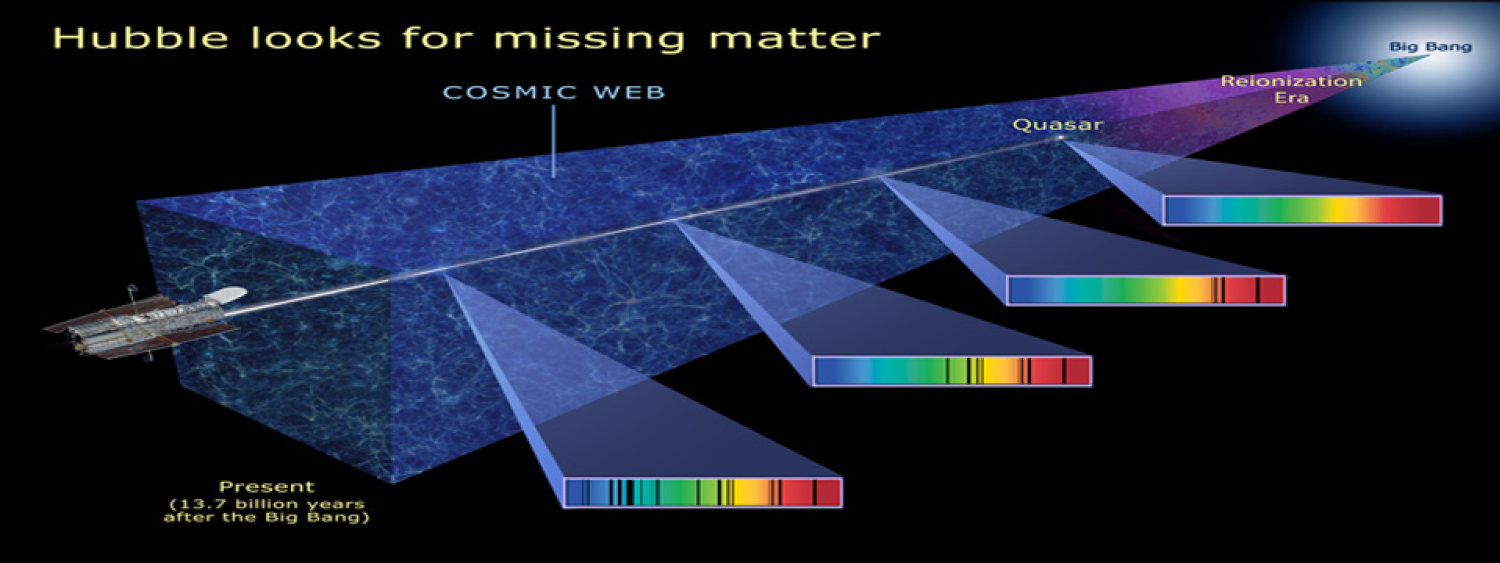
The director of the Center for Astrophysics and Space Astronomy, James Green, pointed to an ultraviolet spectrometer behind glass in a sterile room that will boost thepower of the Hubble Space Telescope by a factor of 20.

Last week NASA said it would send the new spectrometer into space in 2004. That was before Space Shuttle Columbia, which was scheduled to deliver the device, disintegrated on reentry Saturday.

Now Green and the rest of CU's aerospace faculty are unsure of the future of their NASA-funded projects.

But when Green weaves through the wires, tanks, "clean rooms" full of satellite parts, and rocket calibrators in his CU lab, he does not worry too much about the future of space exploration in general.

"We're really hopeful," Green said Monday. He and other professors said that, while they expected delays in certain projects, they believed that exploration beyond our world will rebound.

CU is the number one public university when it comes to space research and funding, and members of the aerospace faculty and the administration want to keep it that way, despite the Columbia disaster this weekend.

"We'll continue to be first in space," CU President Betsy Hoffman vowed Monday after offering her condolences to the families of the seven astronauts.

CU receives an average of $30 million a year from NASA, second only to Johns Hopkins University, and counts 15 astronauts among its alumni.

In the past three weeks CU successfully launched two robotic satellites successfully, only to lose two experiments and one alumnus, astronaut Kalpana Chawla, last week.

"We've gone through the height of elation and the depths of sadness in the last few weeks," said Daniel Baker, director of the Laboratory for Atmospheric and Space Physics, who has been involved with NASA for many years.

Despite disappointment of lost experiments and heartbreak of lost colleagues, CU researchers agreed that their work exploring the stars will shine as brightly as ever.

"It's like the stock market," Astrophysics Professor Michael Shull said, excusing what he called a crass analogy. "You have a crash and then you recover. NASA always recovers and we keep working."

When that work will start up again is anyone's guess. Phone calls to NASA have gone unanswered.

CU's BioServe Center, which had three experiments scheduled for liftoff this year, can't even begin to speculate about when they will resume. The shuttles payloads would piggyback or have been grounded indefinitely.

However, none of the faculty seems impatient.

Now, they mourn, and reassess what needs to be done to the space program. They acknowledge that another liftoff will come, and space education will stay on its trajectory at CU, as it has for more than 50 years.

"I remember asking myself when this happened, "Why do people have to die for scientific work like this?"' Professor Shull, who had been Chawla's assistant advisor, told reporters. "I was heartened by the response I heard from the astronauts' families who said how important this work is and that it should go on."