CASA Home Page
 
  Search:
  

CU, BALL Win Grant for Workon Hubble

By Sarah Gilbert
Camera Staff Writer
Thursday, August 14, 1997

The University of Colorado and Boulder's Ball Aerospace & Technologies Corp. have received a $25 million grant from NASA to build a spectrograph - an instrument for gathering ultraviolet light - for the Hubble Space Telescope.

The spectrograph will allow scientists to determine the make-up of faint and far-away space objects and gases by breaking apart and analyzing the wavelengths of energy from those objects.

It will be the sixth instrument Ball has built for Hubble. The fourth - a spectrograph - was launched this summer, and the fifth - an advanced camera - will launch in 1999.

"We want to understand galaxy formation," said James Green, principal investigator for the project and a professor of astrophysics at CU. The spectrograph should help scientists understand the physical conditions in the galaxy just after the Big Bang, said Green.

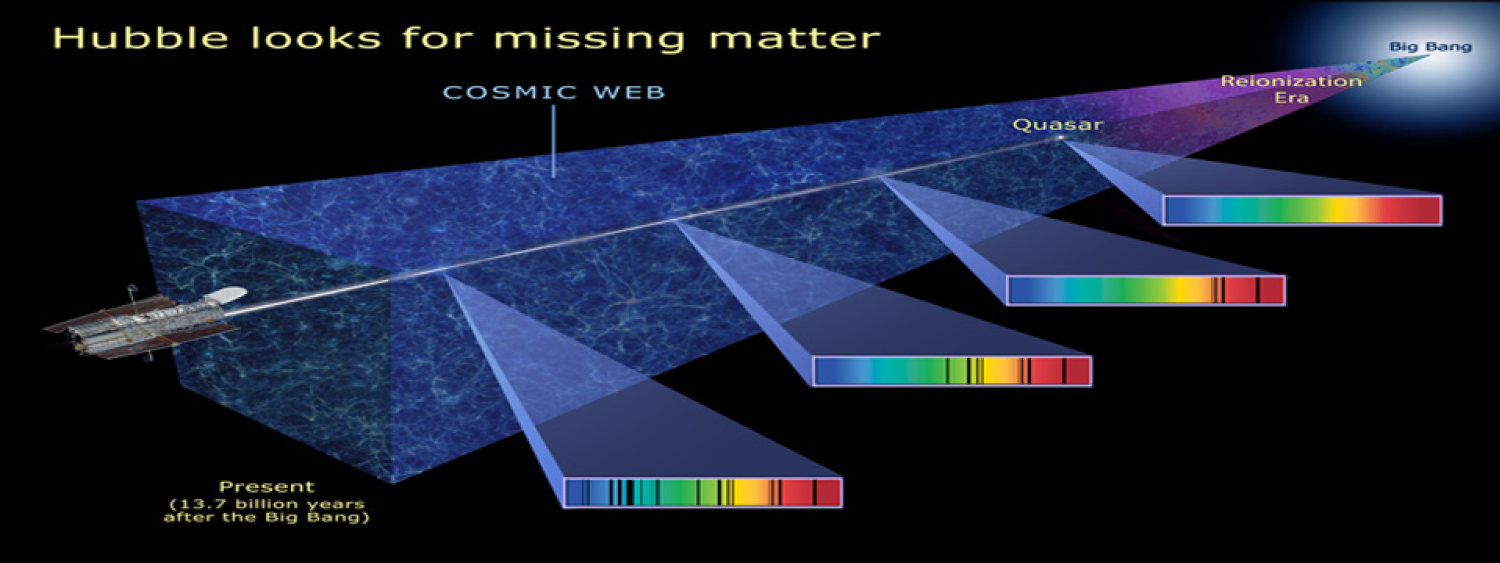
The spectrograph will primarily look at quasars - distant objects in space that send large pulses of energy into the solar system.

"A quasar serves as a lamp that illuminates all the gas between here and the quasar," said Green. Gas that is farther away is older and contains elements that existed when the galaxy formed, he said.

The spectrometer can determine what gases exist in the farthest regions of space by measuring the wavelengths of light that pass through the gases. The spectrometer breaks the light into separate wavelengths much like a prism breaks white light into a rainbow of shades.

John Andrews, a CU engineering professor and the experiment manager for the project, said the grant was given to CU and Ball because they plan to salvage parts of an older spectrograph that came back from Hubble in January for the new spectrograph. The new instrument will be 20 times more sensitive than the old one. Both are about the size of a telephone booth.

After Green designs the instrument, CU and Ball Aerospace engineers will build the spectrograph. Then, a series of experiments will test its abilities before it is launched in 2002.