|
Denver and the West
Hubble to Get Colorado Boost
By Robert Kowalski
Denver Post Staff Writer
The Denver Post
Thursday, August 14, 1997
Astronomers at the University of Colorado
and experts at Ball Aerospace & Technologies Corp. in Boulder
have been selected to build a new device to watch stars and galaxies
as far as ll billion light years away from the Hubble Space Telescope.
The instrument, a telephoneboothsized
device called a spectrograph, is to be flown into space aboard
the space shuttle and affixed to the Hubble telescope in the year
2002.
It is to replace a mechanism attached
to the Hubble in 1993 to correct a defective mirror.
"This allows us to probe various
neat objects . . . quasars," said Mike Shull, a CU astrophysics
professor who helped design the spectrograph proposal.
NASA awarded the $25 million spectrograph
contract to CU and Ball Aerospace this week, choosing their proposal
over seven others.
"It was a slugfest," said
Jon Morse, a research associate with CU's Center for Astrophysics
and Space Astronomy who is the project scientist on the spectrograph
program. "This is something we really worked hard at."
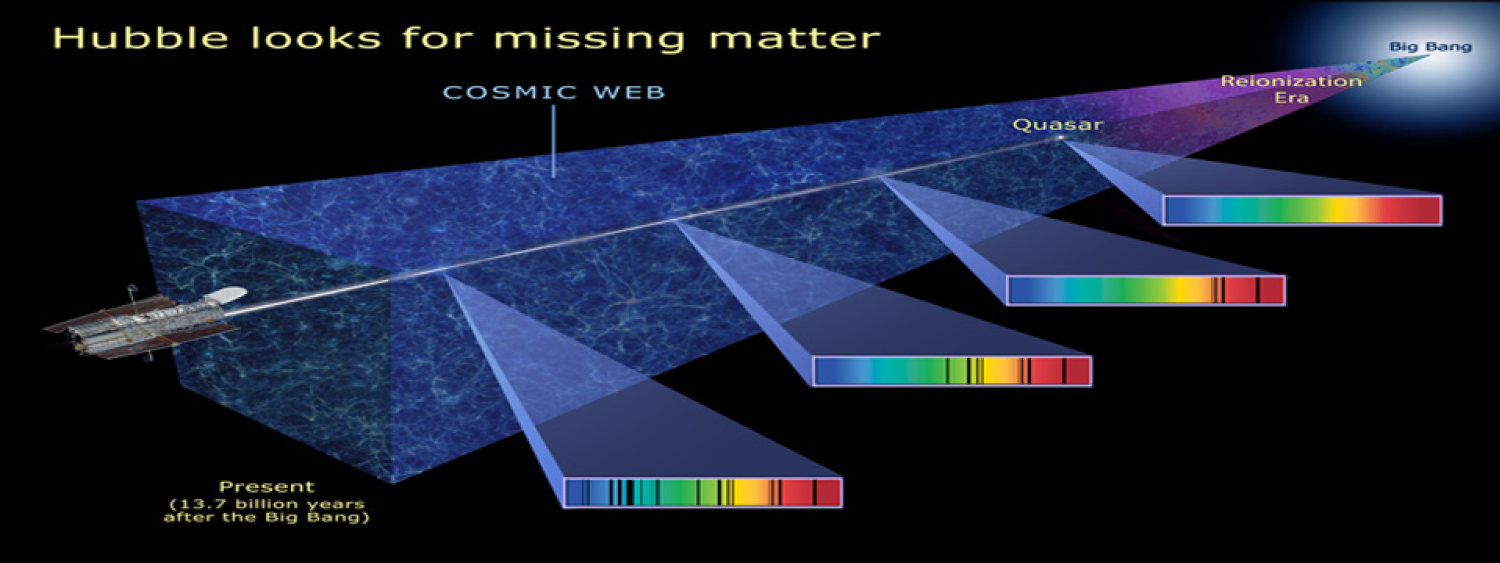
Scientists compare the workings of the
spectrograph to the demonstration schoolchildren are shown of
light running through a prism and being broken down into a spectrum
of individual colors.
By gathering light from distant objects,
the spectrograph breaks the light it receives into the various
colors or wavelengths on the spectrum, providing scientists with
valuable information about the makeup of the object.
"The spectrograph is a fancy prism,"
Morse said.
Unlike a prism, though, the instrument
on the Hubble telescope will gather ultraviolet radiation that is not visible
to the naked eye.
"I'm looking forward to using the
data," Shull said. "The real core of astrophysics is taking spectrographs."
Along with providing information on
stars and quasars-starlike objects believed to be the cores of distant
galaxies- the new spectrograph will allow scientists to study gaseous clouds
in space.
Ball Aerospace designed the spectrograph
that is now aboard the Hubble telescope.
Along with scientists from Ball and
CU, researchers from the University of California at Berkeley, NASA's Goddard
Space Flight Center, the University of Wisconsin and the Space
Telescope Science Institute in Baltimore will contribute to the spectrograph
project.
The new spectrograph, which Shull said
would weigh "about as much as a telephone booth full of college
graduates," will be able to view objects 10 to 20 times fainter in the
sky than the telescope's current spectrograph.
"We're trying to understand the
origins of galaxies," Shull said.
The new spectrograph, known as the Cosmic
Origins Spectrograph, will be placed in the tail end of the
telescope and is expected to operate for seven to eight years in space, Shull
said.
"This stateoftheart
instrument will be a premier Hubble instrument for most of the first decade of the next century," Edward Weiler, a Hubble telescope scientist at NASA's
Washington headquarters, said.
|