
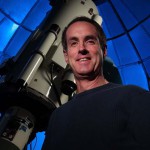
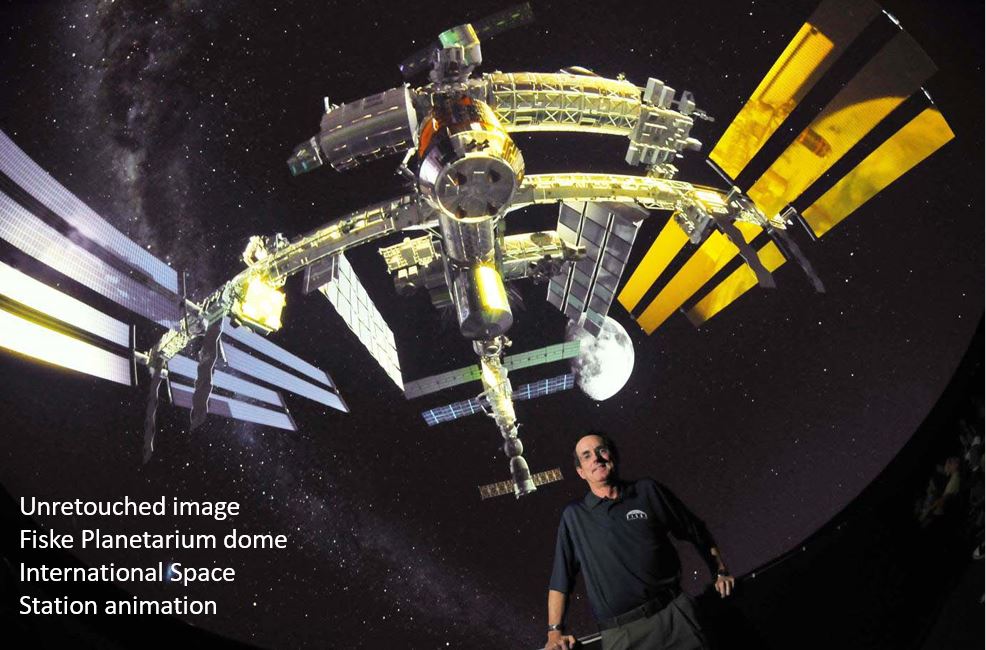
 Hello! I’m Doug Duncan, emeritus faculty member in the Department of Astrophysical and Planetary Sciences of the University of Colorado, and former Director of Fiske Planetarium, the most technically advanced planetarium in the U.S.
Before that I was a Carnegie Fellow; on the staff of the Hubble Space Telescope; and held a joint appointment between Adler Planetarium and the University of Chicago. About once a month I do commentary on the Colorado Public Radio program “Colorado Matters.” I previously did commentary on WBEZ Chicago.
Here are my CV and a Brief Bio.
 I’ve taught about 8,000 students and I’ve linked and am happy to share all my course materials for ASTR3800, “Astronomical Data Analysis and Computer Programming,” a course I originated, ASTR1020, “Introductory Astronomy: Stars and Galaxies,” ASTR1010, “Introductory Astronomy – The Solar System;” as well as the “Excellence in Teaching Workshop” that I present each fall. This is similar to workshops I presented nationally as Education Coordinator of the American Astronomical Society. Many people have requested (and you may copy) my materials for Teaching Scientific Thinking Using Pseudoscience. These are designed for use in any introductory college or high school science class – not just astronomy- fun to use, and successful. A Power Point describing its use was presented to the Astronomical Society of the Pacific Education Meeting in 2020. I’ve broadened this to a semester long freshman seminar, “Real vs. Fake – 21st Century Literacy for Success in College and Beyond.” The need for critical thinking has never been greater; we need to teach it college students. The posting shows part of the course; contact me for more. I hope to have it published. I also have a free online course (MOOC) The Sun and the Total Eclipse of August 2017 that has been taken by over 4500 students. I have a small collection of Labs and Activities that Engage Student Creativity, not boring cookbook labs.
My BS is from Caltech, where I was ringer on the graduate softball team with many soon-to-be-famous astronomers. My PhD., under George Herbig at UC Santa Cruz, was a study of Li depletion and chromospheric emission in solar-type stars. Both these properties diminish over time, allowing approximate age-dating of individual stars not in clusters.
My first job was as a Carnegie Fellow, with the group that first found sunspot cycles on other stars and the rotation of stars like the sun, from the modulation of Ca H and K lines. I then joined the staff of the Hubble Space Telescope. In 1992 I went to Chicago, where I pioneered a new kind of job track that combined public teaching at a planetarium (Adler) with a faculty position at the University of Chicago. My vision calls for astronomers to work in a Planetarium while still remaining active in research, so that they can bring the latest discoveries to the public. That path has now been followed by more than a dozen astronomers at the Hayden Planetarium in NY, at Adler in Chicago, the Denver Museum of Science, and elsewhere.
 I’m the author of the first book about teaching with wireless student response systems (“clickers”) that allow immediate interaction between a teacher and all students in the classroom. Technology and research have advanced since the book was published, so here is a two page Tips for Successful Clicker Use. Watch the excellent videos sponsored by Nobel Prize Winner Carl Wieman. Most clicker users succeed. We find that those who fail have not read the tips or watched the videos. You’ve been warned!
In 2011 I received the Richard Emmons Award from the Astronomical Society of the Pacific given for “Outstanding College Astronomy Teaching in the U.S.”
My current research is in the area of teaching physics and astronomy, especially to non-science majors. I often work with the CU Physics Education Research Group, one of the most successful research programs studying university-level science teaching. Here are some of our results on the effect that cell phone and laptop use has on student grades, and the latest cell phone results (2013).
My spare time interests include leading adventurous educational trips to solar eclipses, including the Great American Eclipse of 2017, and to the arctic to see and photograph the northern lights. In 1993 I went to the North Pole (video), using Twin Otter aircraft.
A total eclipse is unbelievably beautiful and and strange. People scream and cheer and cry, and remember it their whole life. Join my April 2024 eclipse event, “Totality over Texas.” Over four minutes of total eclipse, a “star party,” and great speakers. Please contact me if you want further information, follow the links at the right, and see some results from past eclipses.
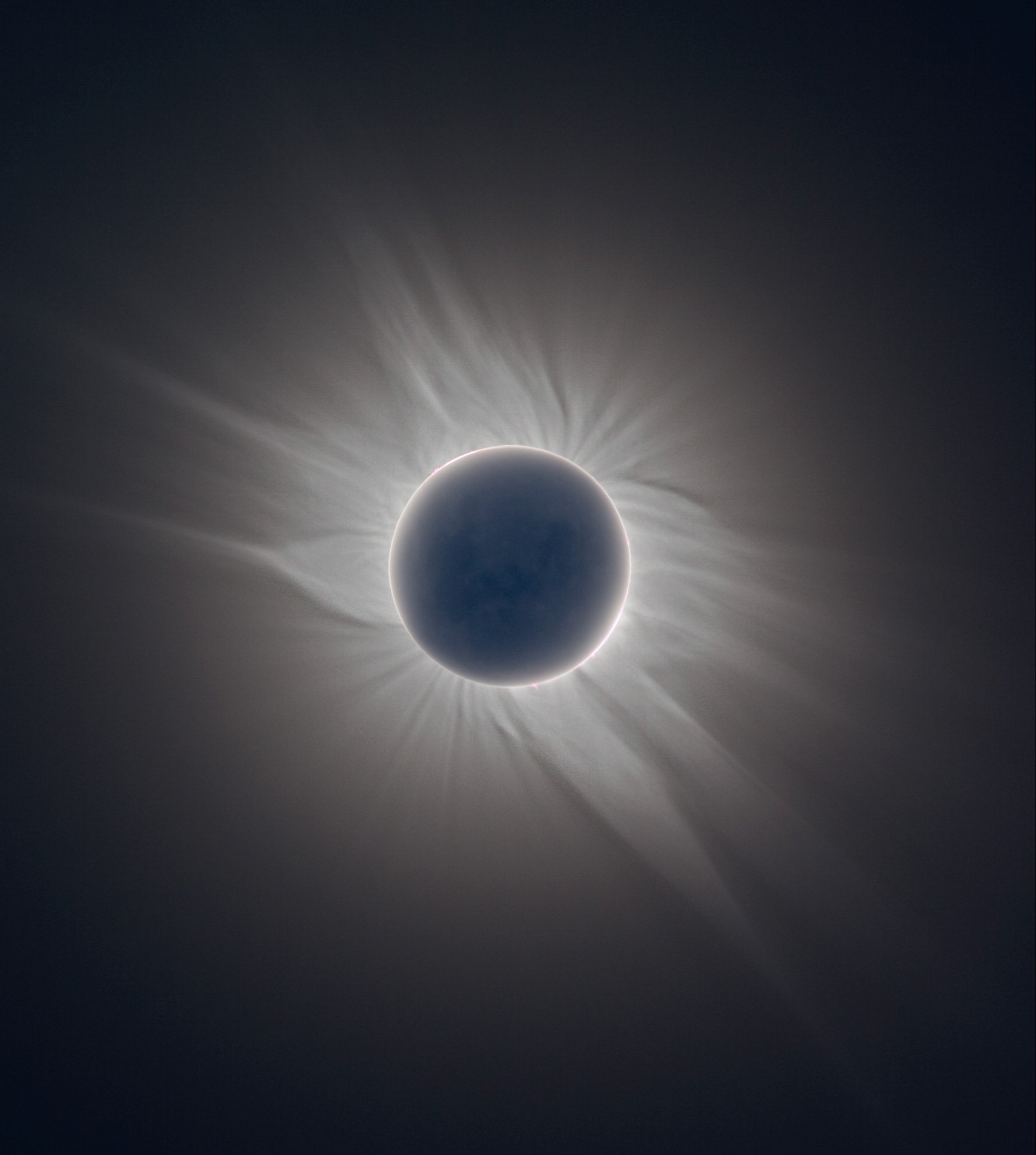
The American Association of Physics Teachers and the Astronomical Society of the Pacific have asked me to write articles on, “How to prepare a school or community event for the upcoming eclipses, for fun, education, and profit.” The ASP article is here. Please share it. I’ve also been talking eclipses on Colorado Public Radio.
Fiske Planetarium has been chosen by NASA to make short videos preparing planetariums, schools, and libraries for the eclipses.
I am the inventor of “Solar Snap,” a simple app and filter that makes it easy to take photos of the sun with a smartphone. Here’s some with my iPhone12. 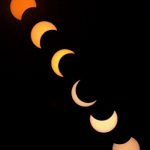 I hope this invention spreads across the country for people to use at eclipses. (Click the Solar Snap link). I created a class activity that illustrates measurement errors and basic statistics using photos of the sun and moon made by students withe Solar Snap.